No products in the cart.

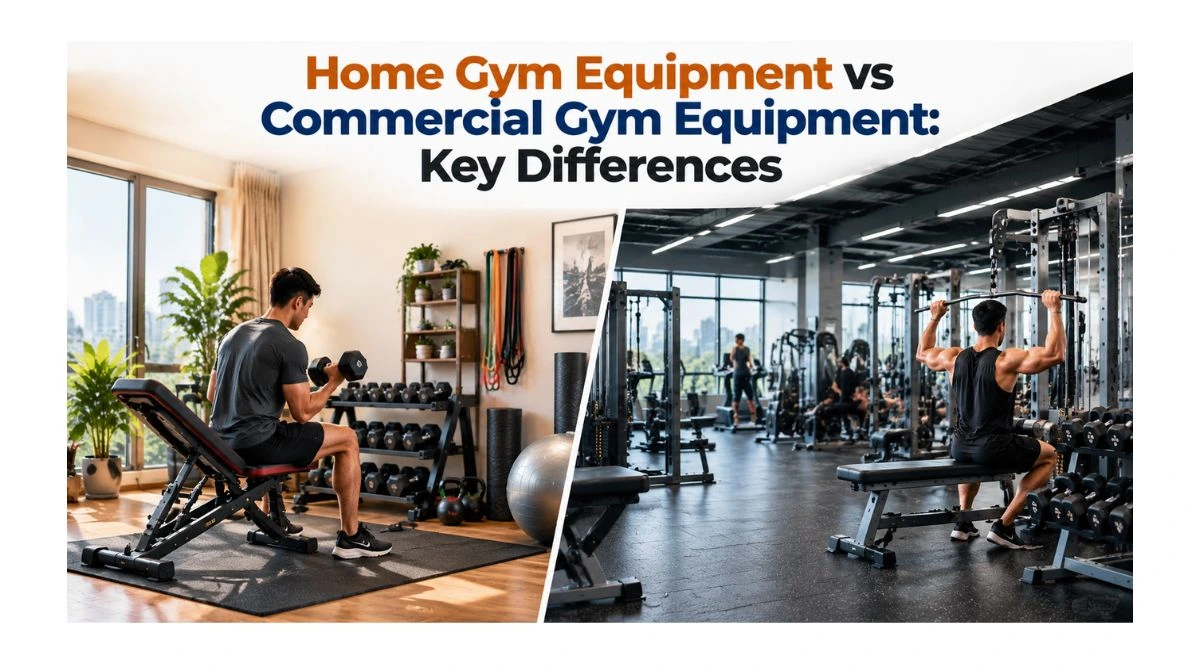
Home Gym Equipment vs Commercial Gym Equipment: Key Differences Leave a comment
The selection of gym equipment depends on specific training requirements, available space, budget, and usage patterns. The difference between home gym equipment vs commercial gym equipment can be understood through factors like structural strength, load capacity, design, and performance. Home equipment supports personal fitness routines, while commercial equipment is engineered for frequent use by multiple users in professional workout environments. This guide explains these differences to help you choose suitable equipment.
What Is Home Gym Equipment?
Home gym equipment is designed for personal workout spaces such as apartments, homes, and private fitness areas. These products focus on compact designs, easy storage, and flexible workout options for individual users. They support strength training, cardio exercises, and functional movements without requiring a commercial gym membership.
Common Home Gym Equipment
Different home gym equipment supports various exercises, helping users build strength, improve mobility, and complete effective workouts.
Dumbbells
Dumbbells are versatile tools for exercises like chest presses, shoulder movements, rows, and arm workouts. They require minimal space and support full-body training.
Resistance Bands
Resistance bands provide lightweight resistance for strength training, stretching, and mobility exercises.
Adjustable Benches
Adjustable benches allow users to perform multiple exercises with better support.
Kettlebells & Compact Cardio Equipment
Kettlebells support functional workouts, while compact treadmills and exercise bikes help complete home fitness routines.
What Is Commercial Gym Equipment?
Commercial gym equipment is built for fitness centers, universities, corporate gyms, and professional training facilities where machines need to handle frequent daily use. These products feature stronger construction, higher weight capacity, and designs suitable for multiple users.
Common Commercial Gym Equipment
Commercial gym equipment includes strength machines, cardio systems, free weights, and functional tools designed for professional fitness facilities.
Strength Training Machines
Strength machines like leg press, chest press, cable crossover, and Smith machines provide controlled training options for different users.
Commercial Cardio Equipment
Treadmills, ellipticals, rowing machines, and exercise bikes are designed for continuous operation.
Free Weight Equipment
Squat racks, weight benches, Olympic bars, and weight plates support advanced strength training.
Functional Training Equipment
Functional rigs, kettlebells, medicine balls, and accessories create flexible workout areas.
Home Gym Equipment vs Commercial Gym Equipment: Main Differences
The difference between home gym equipment vs commercial gym equipment depends on durability, price, space, and performance. Each option is designed for different workout environments and user requirements.
Durability and Build Quality
Home equipment is suitable for personal workouts, while commercial equipment is built for frequent use. Commercial machines usually feature stronger frames, higher weight capacity, and better resistance to wear.
Price Difference
Home gym equipment generally requires a lower investment because it supports fewer users. Commercial equipment costs more due to heavy-duty materials, advanced features, and long-term performance.
Space Requirements
Home equipment works well in smaller areas with compact designs. Commercial setups need larger spaces, proper equipment spacing, and organized workout zones.
Performance and Features
Home equipment supports basic training needs, while commercial machines offer more adjustment options, higher capacity, and better support for different fitness levels.
Home Gym Equipment: Pros and Cons
Home gym equipment is suitable for users who prefer private workouts and flexible training schedules. It allows people to exercise at their convenience without visiting a fitness center.
Advantages of Home Gym Equipment
Benefits include:
- Workout anytime at home
- Saves travel time
- Requires less space
- Lower setup cost
- Suitable for beginners
Limitations of Home Gym Equipment
Home equipment may offer fewer exercise options, lower weight capacity, and limited advanced training features. It may not be suitable for multiple users or professional-level workouts.
Commercial Gym Equipment: Pros and Cons
Commercial gym equipment is built for professional fitness environments where machines handle frequent daily use by multiple users.
Advantages of Commercial Gym Equipment
Benefits include:
- Better durability
- Supports multiple users
- More exercise options
- Professional workout experience
- Longer service life
Limitations of Commercial Gym Equipment
Commercial equipment requires higher investment, more space, regular maintenance, and professional installation. It is suitable for gyms, schools, universities, and corporate fitness facilities that need long-term performance.
Which One Should You Choose?
The right gym equipment depends on your workout goals, available space, budget, and usage requirements.
Choose Home Gym Equipment If You:
Home equipment is suitable for personal workouts, small spaces, apartments, and users who prefer private training. It works well for basic strength training, cardio exercises, and flexible home fitness routines.
Choose Commercial Gym Equipment If You:
Commercial equipment is better for gyms, corporate fitness centers, schools, universities, and facilities with multiple users. It provides higher durability, better performance, and supports frequent daily workouts.
Factors to Consider Before Buying Gym Equipment
Choosing the right gym equipment requires understanding your fitness goals, available space, budget, and usage needs.
Your Workout Goals
Consider whether you focus on strength training, muscle building, weight loss, or general fitness. Your goals help determine suitable equipment.
Available Space
Measure your workout area and consider equipment placement, room size, and storage options before buying.
Budget Planning
Plan for equipment costs, installation expenses, and future maintenance requirements.
Usage Frequency
Personal users may need simple equipment, while gyms and fitness facilities require durable machines designed for regular use.
Maintenance and Warranty Comparison
Maintenance needs vary between home and commercial gym equipment based on usage frequency and design.
Home Equipment Maintenance
Home equipment usually requires:
- Regular cleaning
- Basic inspections
- Occasional adjustments
Commercial Equipment Maintenance
Commercial machines need more frequent servicing due to continuous use. Maintenance may include:
- Regular servicing
- Component checks
- Replacement parts
Warranty support is also important to ensure better equipment performance and long-term value.
Why Choose FitnessMart for Gym Equipment?
FitnessMart provides gym equipment solutions for personal, commercial, and institutional fitness setups. Whether you need home gym equipment for individual workouts or commercial gym equipment for a professional facility, we help you choose suitable products based on your goals and requirements.
Our support includes:
- Fitness equipment selection
- Home gym setup guidance
- Commercial gym solutions
- Equipment support
With the right equipment and guidance, you can create a workout space designed for better training and long-term fitness goals.
Faq for home gym equipment vs commercial gym equipment
Is commercial gym equipment better than home gym equipment?
Commercial equipment is not always necessary for home users. The right option depends on workout goals, available space, budget, and usage frequency.
Can commercial gym equipment be used at home?
Yes, commercial gym equipment can be used at home if you have enough space and budget. It may provide extra durability but requires more room.
What equipment is best for a home gym?
Popular home gym equipment includes dumbbells, adjustable benches, resistance bands, kettlebells, and compact cardio machines.
Why does commercial gym equipment cost more?
Commercial equipment costs more because it uses stronger materials, supports more users, and is designed for long-term performance in busy fitness environments.
Choosing between home and commercial gym equipment depends on your personal goals, available space, and workout needs. Understanding these differences helps you select the right equipment that fits your lifestyle, training requirements, and long-term fitness plans.