
No products in the cart.

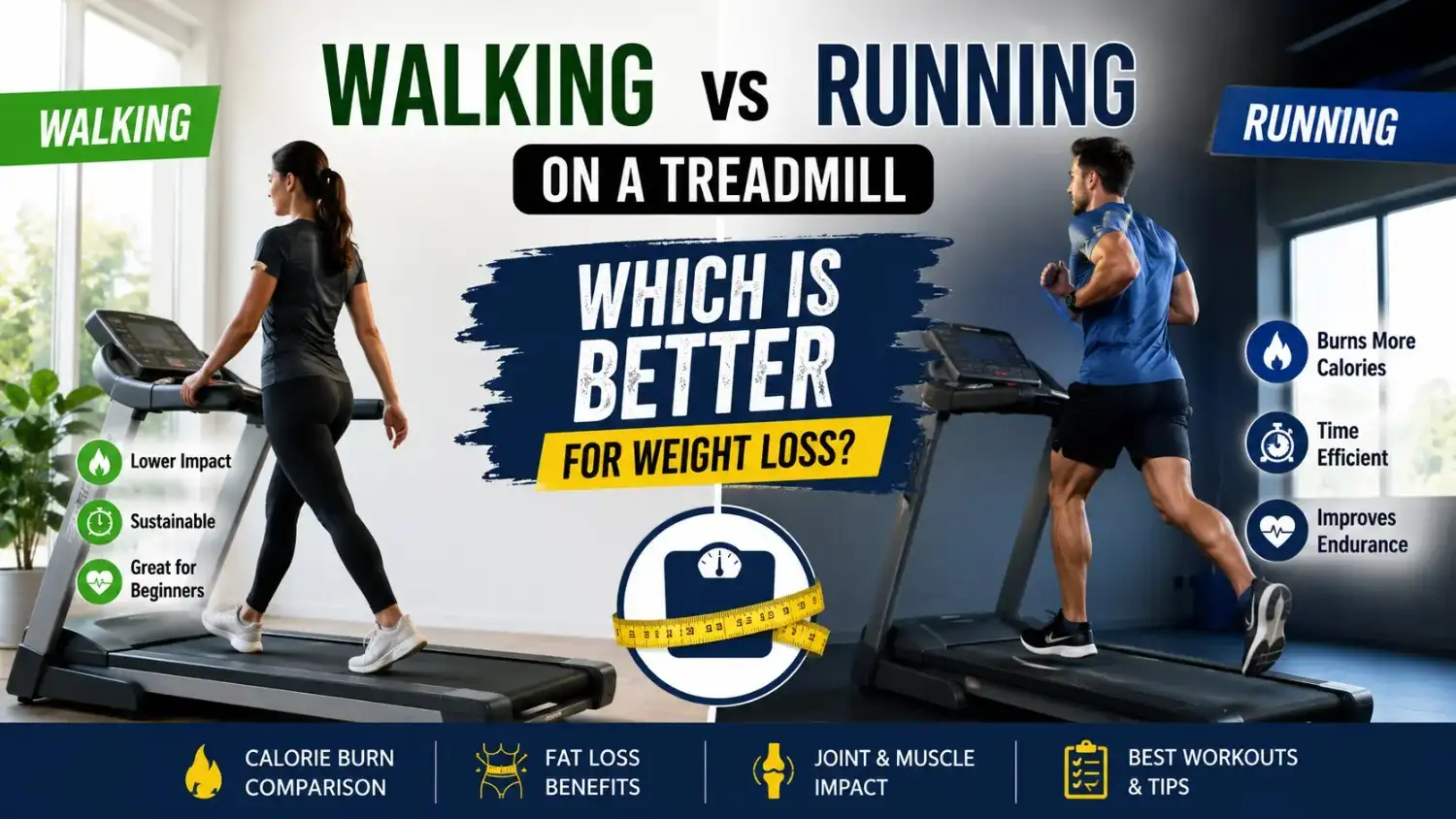
Walking vs Running on a Treadmill: Which Is Better for Weight Loss? Leave a comment
Treadmills remain one of the most effective indoor cardio machines for people trying to lose weight, improve endurance, and stay consistent with exercise. The biggest debate is whether walking or running delivers better fat-loss results. The truth is that both methods can help you burn calories and improve fitness, but the better option depends on your goals, recovery ability, and workout consistency.
Many people now prefer incline walking because it provides sustainable fat burning without putting too much stress on the joints. In this guide, you’ll learn the calorie-burning differences, fat-loss benefits, muscle impact, beginner recommendations, and the best treadmill cardio workout strategies to help you achieve faster and healthier results.
Walking vs Running on a Treadmill: The Core Differences
Walking and running may use the same machine, but they affect the body differently. Walking is considered low-impact cardio that keeps stress on the knees and joints relatively low while still helping you burn calories steadily. Running, on the other hand, increases heart rate quickly and burns more calories in less time. People following a cardio plan for beginners often start with walking because it is easier to sustain consistently.
Running suits people who want higher intensity and faster conditioning improvements. Understanding what is the difference between aerobic exercise and anaerobic exercise also matters here because walking mainly targets aerobic endurance, while intense running sessions can move into an anaerobic workout zone.
Which Burns More Calories on a Treadmill?
Running usually burns more calories per minute because it requires more energy and muscle activation. A person running at moderate intensity can burn significantly more calories than someone walking at a casual pace. However, incline walking can narrow the gap and sometimes become equally effective for fat loss over longer sessions.
Many fitness experts recommend combining walking and running for sustainable results. Incline walking keeps the heart rate elevated while reducing impact on the joints. This is especially useful for people using machines like the xterra treadmill, xterra treadmill tr300, or xterra treadmill trx3500 for daily home workouts. High-intensity running sessions can also create an afterburn effect where the body continues burning calories after exercise.
Still, calorie burn alone does not determine weight loss success. Consistency, nutrition, and workout duration matter more in the long term. Even simple routines combined with an exercise bike workout or stationary bike workout can improve overall calorie expenditure.
Walking vs Running for Fat Loss
Both walking and running are effective for fat loss because they help create a calorie deficit. Running generally produces faster short-term results because it burns more calories in less time. However, walking is easier to recover from, making it more sustainable for daily exercise.
Many beginners struggle with intense running programs and eventually quit. Walking allows longer sessions with lower fatigue, which often leads to better long-term consistency. Combining treadmill sessions with air cycling, air bike for weight loss, or exercise bike exercises to lose weight can further improve fat-burning efficiency while reducing overuse injuries.
Is Walking or Running Better for Belly Fat?
Belly fat reduction depends more on overall calorie balance than a specific exercise. Both walking and running can reduce abdominal fat when paired with proper nutrition and consistent workouts. The best approach depends on your fitness level and how sustainable the workout feels for you.
How Treadmill Cardio Reduces Belly Fat
Treadmill workouts help burn calories, improve metabolism, and increase cardiovascular endurance. When your body burns more calories than it consumes, stored fat gradually decreases, including belly fat. Consistency matters far more than extreme intensity.
Many people underestimate the value of walking because it feels easier. However, steady incline walking performed regularly can produce excellent fat-loss results. Pairing treadmill sessions with a balanced diet and beginner strength training using dumbbell sets can accelerate visible progress.
Cardio also improves heart health, endurance, and daily activity levels. People following a gym beginner cardio workout routine often see better adherence with walking because it feels manageable and less exhausting.
Running for Belly Fat Reduction
Running creates a high-intensity calorie burn that helps accelerate fat loss. Faster speeds push the body harder, increasing oxygen demand and metabolic activity. This can improve conditioning and calorie expenditure within shorter workout sessions.
Some runners also incorporate sprint intervals because high-intensity cardio may increase post-workout calorie burning. However, excessive running without recovery can lead to fatigue and injuries. Many people ask, does anaerobic exercise burn muscle? The answer depends on recovery and nutrition. Proper protein intake and balanced training help preserve muscle while reducing fat.
Incline Walking for Belly Fat
Incline walking is one of the most effective low-impact fat-loss methods. Increasing incline activates the glutes, hamstrings, and calves while keeping joint stress relatively low. It also keeps the heart rate elevated longer, helping the body burn calories steadily.
This method is especially helpful for overweight beginners, older adults, or people recovering from injuries. Home treadmill models such as the xterra tr300 treadmill, trx3500, and xterra trx3500 are commonly used for incline walking programs because they provide adjustable incline levels and stable cushioning.
Which Is Better for Beginners?
Walking is usually the better starting point for beginners because it reduces injury risk and allows the body to adapt gradually. People new to fitness often benefit from a cardio gym plan for beginners that starts with brisk walking before introducing running intervals.
Running too aggressively can cause knee pain, shin splints, and excessive fatigue. Beginners should focus on consistency first rather than intensity. Combining walking with light resistance training and an occasional exercise bike workout creates a balanced routine that improves endurance safely.
For people training for endurance events like a 1st ironman, gradually progressing from walking to running is often more sustainable than starting with high-intensity sessions immediately.
Incline Walking vs Running: Which Is Better?
Incline walking and running are both powerful cardio options, but they serve different purposes depending on fitness goals and recovery ability.
Benefits of Incline Walking
Incline walking increases workout intensity without requiring high-speed running. It activates more lower-body muscles, especially the glutes and hamstrings, while remaining joint-friendly. Many people find incline walking easier to sustain consistently, making it ideal for long-term fat loss.
It is also excellent for beginners and people recovering from injuries. Walking on incline can provide a strong cardiovascular challenge while minimizing impact stress. Users of the xterra fitness trx3500, xterra fitness trx3500 folding treadmill, and xterra tr6 6 treadmill often use incline programs for steady-state fat-burning workouts.
Benefits of Running
Running improves cardiovascular fitness faster and burns more calories in shorter periods. It also helps athletes improve speed, endurance, and performance conditioning. People with limited workout time often prefer running because even shorter sessions can produce strong calorie-burning effects.
Running can also increase aerobic and anaerobic capacity simultaneously. Understanding what is the difference between aerobic exercise and anaerobic exercise helps explain why running feels more demanding at higher intensities.
Who Should Choose Incline Walking?
Incline walking is ideal for:
- Beginners
- People with knee discomfort
- Overweight individuals
- Those wanting sustainable daily cardio
- People seeking lower-impact fat-loss workouts
Who Should Choose Running?
Running suits:
- Experienced exercisers
- Athletes
- People with limited workout time
- Individuals focused on conditioning and performance
Best Treadmill Workouts for Weight Loss
The best treadmill workout is the one you can maintain consistently. Beginners often do well with brisk walking for 30–45 minutes at a slight incline. This approach keeps calorie burn steady while reducing excessive fatigue.
Intermediate users can alternate walking and running intervals. For example, walk for two minutes and run for one minute repeatedly. This style improves endurance and calorie burn without overwhelming the body.
Advanced users may prefer high-intensity interval training with short sprint bursts followed by recovery walking. Combining treadmill sessions with air bike for weight loss workouts or stationary bike workout routines creates excellent variety and reduces overuse stress.
If you own machines like the xterra 6.6 treadmill, xterra tr300, or xterra treadmill trx3500, regular maintenance matters too. Learning how to lube a treadmill and using proper xterra treadmill lube can improve belt performance and extend machine lifespan.
Walking vs Running on a Treadmill for Different Goals
Your fitness goal should determine whether walking or running fits better into your routine. Running works well for fast calorie burn and athletic conditioning, while walking is better for long-term sustainability and recovery.
Walking is often easier to maintain daily, making it ideal for beginners and people focused on gradual fat loss. Running benefits people seeking performance improvements or shorter, more intense workouts. Many people combine both methods for the best overall results.
Treadmill Walking vs Running: Pros and Cons
Pros and Cons of Walking
Pros
- Joint-friendly and lower impact
- Easier for beginners
- Sustainable for daily exercise
- Requires less recovery time
- Great for longer fat-burning sessions
Cons
- Burns fewer calories per minute
- Requires longer workout durations
- Slower conditioning improvements
Pros and Cons of Running
Pros
- Higher calorie burn
- Faster cardiovascular improvements
- Efficient for shorter workouts
- Better for athletic conditioning
Cons
- Higher injury risk
- Greater recovery demands
- Harder to sustain every day
- Can increase fatigue quickly
Walking often works better for people seeking consistency and long-term adherence. Running benefits those who enjoy intense workouts and want quicker conditioning improvements. The best strategy for most people is combining both approaches based on energy levels and recovery needs.
Expert Tips to Maximize Weight Loss on a Treadmill
Consistency matters more than intensity alone. Instead of pushing too hard every session, focus on building a routine you can maintain long term. Gradually increase incline or speed as endurance improves.
Use incline strategically because it increases calorie burn without excessive joint impact. Combining cardio with strength training using dumbell sets can preserve muscle mass while losing fat. Many people worry, does anaerobic exercise burn muscle? In reality, balanced nutrition and recovery help protect muscle while improving body composition.
It’s also important to maintain your treadmill properly. Understanding how to lube a treadmill and using recommended xterra treadmill lube products helps prevent friction and improves workout performance on models like the xterra treadmill tr300 and xterra fitness trx3500.
Frequently Asked Questions
Is walking on a treadmill enough to lose weight?
Yes. Walking consistently while maintaining a calorie deficit can effectively support long-term weight loss.
Does running burn more fat than walking?
Running burns more calories per minute, but walking can still produce excellent fat-loss results when done consistently.
Is incline walking better than running?
Incline walking is better for low-impact sustainable fat loss, while running is better for faster calorie burning and conditioning.
How long should I walk on a treadmill to lose weight?
Most people benefit from walking 30–60 minutes regularly, depending on intensity, diet, and fitness goals.