
No products in the cart.

Treadmill Benefits: The Ultimate Guide to Transforming Your Health and Fitness Leave a comment
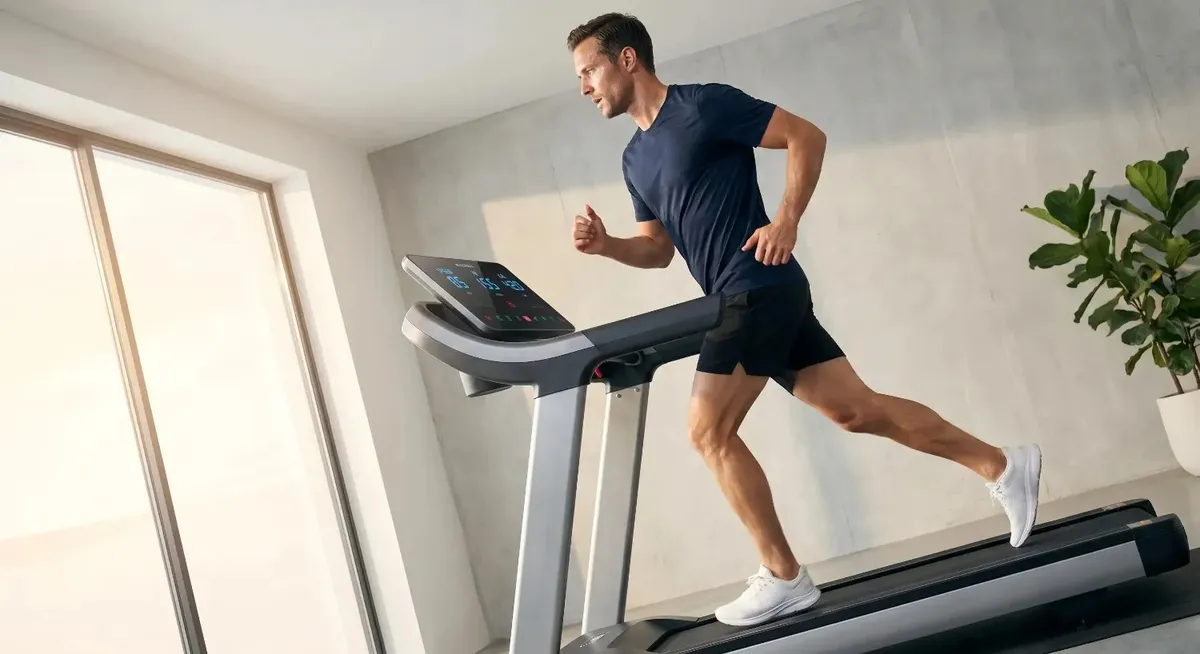
If you’ve ever wondered whether a treadmill is worth the investment, the answer is a clear yes. Whether your goal is to lose weight, boost your mood, or simply move more — a treadmill benefits gives you a powerful, flexible way to make it happen. Let’s break down everything you need to know.
What Is a Treadmill?
A treadmill is a piece of cardio equipment that lets you walk, jog, or run on a moving belt — indoors, on your own schedule. There are two main types. A motorized treadmill uses an electric motor to drive the belt at your chosen speed, giving you full control over pace and incline. A manual treadmill, on the other hand, is powered entirely by your own movement — no plug required. Both serve the same core purpose: helping you get your steps in, rain or shine.
Why Choose a Treadmill for Your Workout?
Life gets busy. Outdoor runs get cancelled by rain, heat, or just a packed schedule. That’s where a treadmill steps in — literally.
Unlike other cardio machines, a treadmill mirrors natural human movement. Walking and running are things your body already knows how to do. There’s no steep learning curve like with a cross trainer or a spinning bike. You just step on and go.
It’s also incredibly versatile. You can do a gentle morning walk, a fat-burning incline session, or a high-intensity interval sprint — all on the same machine. For anyone serious about building a consistent cardio fitness routine, few tools match the treadmill’s simplicity and effectiveness.
Treadmill Benefits of Physical Health
Improves Cardiovascular Health
Think of your heart like a muscle. The more you train it, the stronger it gets. Regular treadmill sessions raise your heart rate, improve blood circulation, and over time, lower your resting heart rate. Studies show that consistent aerobic exercise can significantly reduce the risk of heart disease, high blood pressure, and stroke. Even 30 minutes of brisk walking, five days a week, makes a measurable difference.
Burns Calories and Supports Weight Loss
A treadmill is one of the most efficient calorie-burning machines available. Depending on your weight and intensity, you can burn anywhere from 250 to 600 calories per hour. Pair that with a balanced diet, and you’ve got a solid foundation for sustainable weight loss. The key is consistency — not perfection.
Strengthens Muscles and Bones
Running and walking aren’t just cardio. Every step you take engages your calves, hamstrings, glutes, and core. Over time, this repeated weight-bearing exercise strengthens not just muscles but also bones — making treadmill workouts a great tool for improving bone density and reducing the risk of osteoporosis as you age.
Boosts Metabolism
Here’s something most people don’t realize: your body keeps burning calories even after you step off the treadmill. This is called the afterburn effect (or EPOC — Excess Post-Exercise Oxygen Consumption). High-intensity treadmill sessions, in particular, can keep your metabolic rate elevated for hours after your workout ends. Think of it as getting paid overtime for work you’ve already done.
Mental Health Benefits of Running on a Treadmill
Reduces Stress and Anxiety
Ever notice how a good run clears your head? That’s not a coincidence. Physical exercise lowers levels of cortisol — your body’s primary stress hormone. A 20–30 minute treadmill session can act like a mental reset button, helping you shake off the noise of a stressful day.
Elevates Mood with Endorphins
Running triggers a release of endorphins — the brain’s feel-good chemicals. This is what people call the “runner’s high,” and it’s very real. Regular treadmill use has been linked to reduced symptoms of depression and anxiety, improved self-confidence, and a more positive overall outlook. It’s essentially a natural mood booster that’s free and available anytime.
Improves Sleep Quality
Struggling to get a good night’s sleep? Regular moderate-intensity exercise like treadmill walking or jogging has been shown to improve both the quality and duration of sleep. Just avoid intense sessions too close to bedtime — give your body at least 2 hours to wind down before you hit the pillow.
Treadmill vs. Outdoor Running: Which Is Better?
Impact on Joints
Treadmill belts are cushioned, which means less impact on your knees, hips, and ankles compared to running on asphalt or concrete. This makes treadmills a smarter choice for people recovering from injury or those with joint sensitivity.
Weather and Convenience
Outdoor running is great — until it’s not. Rain, extreme heat, or icy paths can derail your plans entirely. A treadmill removes all of that uncertainty. Your workout happens on your terms, every time.
Calorie Burn Comparison
Outdoor running does burn slightly more calories because your body works harder against wind resistance and uneven terrain. However, the difference is small — and using your treadmill’s incline feature can easily close that gap.
Safety and Control
With a treadmill, you control the speed, incline, and duration. There are no potholes, no traffic, and no distractions. For early morning or late-night exercise, it’s simply the safer option. You can also track heart rate zones, distance, and pace far more accurately than you can outdoors.
Types of Treadmill Workouts for Every Fitness Level
Beginner Walking Routines
Start with 20–30 minutes of brisk walking at a comfortable pace (around 3–4 mph). Focus on posture, breathing, and consistency. Three to four sessions per week is a great place to begin your walking workout plan.
Interval Training (HIIT)
High-intensity interval training on a treadmill alternates between short bursts of fast running and recovery periods at a slower pace. For example: sprint at 8 mph for 30 seconds, then walk at 3.5 mph for 90 seconds. Repeat for 20–25 minutes. It’s one of the most time-efficient ways to burn fat and improve cardiovascular endurance.
Incline Workouts
Walking or running on an incline engages your glutes, hamstrings, and core far more than flat running. Even a 5–8% incline at a moderate pace can dramatically increase calorie burn and muscle activation. This is a favorite strategy for those chasing body composition goals.
Long-Distance Endurance Runs
For those training for races or building serious aerobic capacity, long steady-state runs at a comfortable pace (60–75% of max heart rate) are key. These sessions build your engine — your cardiovascular base — and improve fat utilization as fuel.
How to Start a Treadmill Routine as a Beginner
Starting is always the hardest part, but it doesn’t have to be complicated. Here’s a simple framework:
Week 1–2: Walk at 3.0–3.5 mph for 20 minutes, three days a week. Focus on getting comfortable and consistent.
Week 3–4: Increase to 25–30 minutes. Add a slight incline (2–3%) to engage more muscles.
Week 5–6: Introduce light jogging intervals. Try 1 minute of jogging followed by 2 minutes of walking, repeated for 20–25 minutes.
Week 7+: Gradually increase jogging time and reduce walking recovery periods.
Always warm up for 5 minutes before and cool down for 5 minutes after each session. Wear supportive running shoes to protect your joints. And most importantly — track your progress. Seeing improvement is one of the most powerful motivators there is.
How to Choose the Right Treadmill for Your Home
Choosing a treadmill is a big decision, so here’s what to look at:
Motor Power: For regular running, look for at least 2.5–3.0 continuous horsepower (CHP). A motorized treadmill with a strong motor handles varied speeds and long sessions with ease.
Belt Size: A belt that’s at least 20 inches wide and 55 inches long gives you enough room to run comfortably without feeling cramped.
Cushioning: Good deck cushioning reduces joint impact significantly — especially important for daily use.
Built-In Programs: Look for pre-set workout programs, incline controls, and heart rate monitoring. These features make workouts more engaging and effective.
Budget vs. Space: If space or budget is tight, amanual treadmill is a smart, compact alternative. For cross-training variety, you might also consider pairing your treadmill with an air bike or a recumbent bike for low-impact recovery days.
Safety Tips for Treadmill Use
Safety isn’t exciting, but it matters. Here’s how to keep every session injury-free:
- Always clip the safety key to your clothing. If you slip, the machine stops instantly.
- Wear proper footwear. Running shoes with good arch support protect your knees and ankles.
- Stay hydrated. Keep water within reach and sip regularly.
- Start at a low speed and increase gradually — never jump onto a moving belt at full speed.
- Pay attention. Avoid looking at your phone while running. One distraction can lead to a fall.
- Listen to your body. If something hurts, stop. Pain is a signal, not a challenge.
Frequently Asked Questions
How long should I walk on a treadmill to see results?
Most people start noticing results — improved energy, weight changes, better endurance — within 3 to 4 weeks of consistent 30-minute sessions, five days a week.
Is a treadmill good for losing belly fat?
Yes — regular treadmill cardio burns overall body fat, including belly fat, especially when combined with a healthy diet and strength training.
How many calories can I burn on a treadmill in 30 minutes?
You can burn roughly 150 to 400 calories in 30 minutes depending on your body weight, speed, and incline level.
Is it okay to use a treadmill every day?
Yes, for moderate walking — but if you’re running intensely, allow at least one or two rest or active recovery days per week to prevent overuse injuries.
What is the best treadmill speed for beginners?
A comfortable starting speed is 2.5 to 3.5 mph for walking, or 4 to 5 mph for a light jog — adjust based on how your body feels.