
No products in the cart.
What Maintenance Does a Treadmill Need? Complete Guide (2026) Leave a comment
Investing in a treadmill is a significant step toward achieving your fitness goals, but many users overlook one crucial aspect: regular maintenance. Whether you’re a casual jogger or a serious runner, understanding what maintenance does a treadmill need can save you from costly repairs and extend your machine’s life considerably. In this comprehensive treadmill maintenance guide, we’ll walk you through everything you need to know to keep your equipment running smoothly for years to come.
Why Regular Treadmill Maintenance Is Important
Think of your treadmill like a car—it needs regular care to perform at its best. Without proper maintenance, you’ll face numerous issues including unexpected breakdowns, decreased performance, and potentially dangerous malfunctions. A well-maintained treadmill can last 7-12 years, while a neglected one might fail within 2-3 years.
Regular treadmill preventive maintenance not only protects your investment but also ensures your safety during workouts. You’ll avoid problems like belt slipping during workout, treadmill motor sparking, and the dreaded burning smell from treadmill motor that signals serious trouble. Moreover, staying on top of maintenance helps preserve your treadmill warranty coverage, as most manufacturers require proof of regular care to honor warranty claims.
What Maintenance Does a Treadmill Need?
Daily Maintenance
Your treadmill care routine should begin with simple daily tasks that take just a few minutes. After each workout, make it a habit to wipe down console and handles using a soft, slightly damp cloth to remove sweat and moisture. Sweat is surprisingly corrosive and can damage electronic components and metal parts over time. Keep a microfiber towel handy near your treadmill for quick cleanups.
Additionally, vacuum under the treadmill at least once a week to prevent dust accumulation, which can work its way into the motor and cause treadmill overheating issue. These treadmill cleaning tips might seem basic, but they’re your first line of defense against premature wear.
Weekly Maintenance
Once a week, conduct a more thorough inspection as part of your treadmill maintenance checklist. Start by checking the treadmill belt alignment—if the belt has drifted to one side, it needs adjustment to prevent uneven wear. Next, examine the treadmill belt tension by lifting the belt in the center; it should lift about 2-3 inches from the deck. Test the belt while walking at low speed to ensure there’s no slipping or hesitation.
Take time to check for loose bolts and screws, especially around the frame and console area, as vibrations during use can gradually loosen hardware. Don’t forget to inspect power cords and surge protector for any signs of fraying or damage. These weekly checks help you catch small problems before they become expensive repairs.
Monthly Maintenance
Monthly maintenance involves more detailed attention to your treadmill’s mechanical components. This is when you should seriously evaluate whether it’s time to lubricate the treadmill belt every 3 months or when you’ve reached the 150 miles or 200 km usage check threshold. Proper treadmill belt lubrication is essential to reduce friction between belt and deck, preventing excessive wear on the treadmill running deck wear.
Check your manufacturer’s guidelines, but most treadmills benefit from monthly inspections of the motor area—listen for unusual sounds that might indicate worn treadmill motor brushes or other mechanical issues. Keep an eye out for treadmill speed inconsistency or treadmill electronic glitches, which often signal the need for professional attention.
Quarterly Maintenance
Every three to four months, conduct a comprehensive treadmill deep cleaning session. This involves more than surface cleaning—you’ll need to access the motor housing to remove accumulated dust and debris that can cause treadmill motor overheating. Examine the belt for signs of wear; remember that treadmill belt lifespan 3–4 years is typical with proper care, but heavy use might require earlier treadmill belt replacement.
Check the deck underneath the belt—if it shows significant wear on one side, you might be able to perform a treadmill deck flipping (phenolic coating) to extend its life. Investing in a treadmill maintenance kit makes these quarterly sessions much easier and ensures you have the right tools on hand.
How to Lubricate a Treadmill Properly
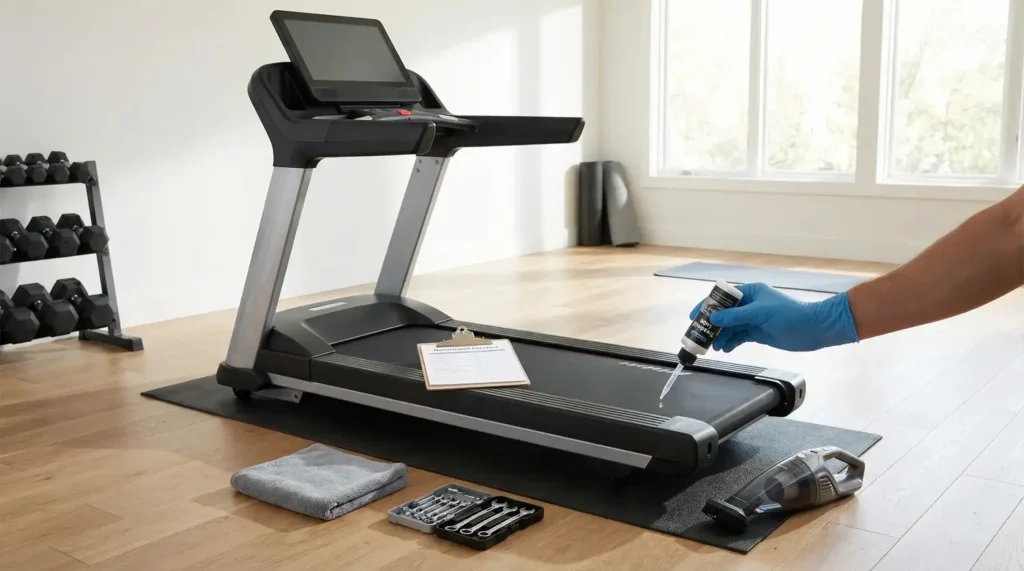
Lubrication is perhaps the most critical aspect of treadmill deck maintenance. Always use a silicone-based treadmill lubricant—never use WD-40 or petroleum-based products, as these can damage your belt. Most manufacturers recommend lubricating every three months or after 150 miles of use. To lubricate properly, loosen the belt slightly, apply lubricant evenly across the deck surface, then run the treadmill at low speed for a few minutes to distribute it. Proper lubrication prevents that concerning treadmill vibration reduction and eliminates the friction that causes premature wear.
Pro Tips to Increase Treadmill Lifespan
Want to maximize your treadmill lifespan extension? Consider these expert recommendations:
- Invest in a Quality Treadmill Mat: The treadmill mat benefits include noise reduction, floor protection, and effective vibration dampening that protects both your equipment and flooring.
- Choose the Right Location: Place your treadmill in a climate-controlled area away from direct sunlight and moisture to prevent electronic corrosion and belt deterioration.
- Respect Weight Limits: Never exceed the manufacturer’s weight capacity, as doing so puts excessive strain on the motor, belt, and frame components.
- Enforce Proper Footwear: Encourage all users to wear proper athletic shoes—street shoes track in dirt and debris that accelerates wear on the belt and deck.
- Schedule Professional Inspections: When considering professional treadmill servicing, know that annual professional inspections can catch issues early and often cost less than major treadmill repair costs down the line.
- Follow Maintenance Religiously: Following these treadmill servicing tips diligently can help you avoid the typical treadmill maintenance cost in Bangladesh and similar markets, where repairs can be surprisingly expensive if problems are left unaddressed.
Conclusion
Understanding what maintenance does a treadmill need isn’t complicated, but it does require commitment and consistency. By following this treadmill maintenance guide and incorporating these practices into your routine, you’ll ensure your investment continues delivering excellent performance for years. Remember, a few minutes of preventive care today can save you hours of frustration and hundreds of dollars tomorrow.
Start your maintenance routine today, and your treadmill will reward you with reliable, safe workouts for the long haul. Visit fitnessmart.com.bd for quality treadmills and maintenance supplies to keep your equipment in peak condition.
Frequently Ask Questions
What maintenance should I do on my treadmill?
Clean the belt and console daily, vacuum underneath weekly, lubricate the belt every 3 months or 150 miles, check belt alignment and tension monthly, and inspect all mechanical parts quarterly for optimal performance.
What is the 3/12/30 rule on a treadmill?
The 3/12/30 rule is a popular walking workout where you walk at 3 mph speed, 12% incline, for 30 minutes to burn calories and strengthen muscles without running.
How often do treadmills need to be serviced?
Home treadmills need basic maintenance weekly and professional servicing annually, while commercial treadmills require quarterly professional inspections due to heavier usage and wear.
What happens if I don’t lubricate my treadmill?
Without lubrication, friction between the belt and deck increases dramatically, causing motor strain, belt wear, burning smells, overheating, and potentially expensive motor or deck replacement.Can you lose belly fat on a treadmill? Yes, regular treadmill workouts combined with a calorie deficit help reduce overall body fat including belly fat, especially when incorporating interval training and incline walking for maximum calorie burn.